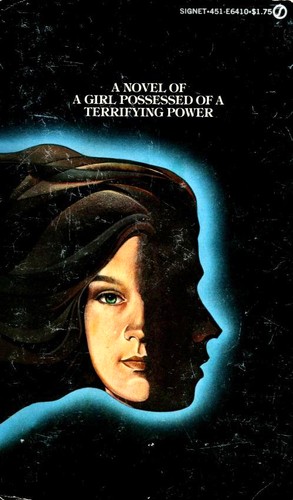
How it was received Paperback sales topped four million after the 1976 film, and Carrie hit The New York Times bestseller list for 14 weeks. Critics, including The New York Times and Kirkus, praised King's debut, though some later reviewers found the epistolary sections uneven. — Wikipedia
Ending signals — verified, spoiler-light. Tap a question to see only that answer.
Is the ending happy?
TragicDoes it end on a cliffhanger?
NoIs the romance resolved?
Yes — settledDo major characters die?
YesHow does Carrie end?
At the senior prom, Carrie White is elected prom queen alongside Tommy Ross in a vote rigged in her favor by Sue Snell's boyfriend as an act of atonement for earlier bullying. But Chris Hargensen, excluded from the prom for her role in tormenting Carrie, has rigged buckets of pig's blood above the stage. As Carrie is crowned, the blood drenches her and a falling bucket knocks Tommy unconscious. Amid the students' laughter (much of it actually horrified shock), Carrie flees the gymnasium, her fragile sense of acceptance shattered and her rage unleashed.
Using her telekinetic powers, Carrie seals the exits and triggers the sprinkler system, which shorts out ungrounded wiring and electrocutes many trapped students; the resulting fire ignites the school's fuel tanks and destroys the building in an explosion. Tommy, still unconscious, dies in the fire. Carrie, her sanity broken, walks home destroying the town as she goes — rupturing a gas main to level downtown Chamberlain and downing power lines that kill townspeople who come outside to investigate.
At home, she confronts her mother Margaret, who has been waiting with a knife, believing Carrie to be an agent of evil rooted in the sin of her conception. Margaret stabs Carrie, but Carrie uses her power to stop her mother's heart, killing her. Mortally wounded herself, Carrie makes her way toward the edge of town and encounters Chris Hargensen and her boyfriend Billy Nolan attempting to flee; when Billy tries to run her down with his car, Carrie telekinetically seizes control of the vehicle and crashes it into a wall, killing both of them.
Sue Snell, drawn by a psychic pull from Carrie, finds her dying in a roadhouse parking lot. Carrie initially believes Sue orchestrated the blood prank, but when Sue offers her mind for Carrie to search telepathically, Carrie sees the truth of Sue's innocence and goodwill. Sue remains mentally linked to Carrie as she dies. The catastrophe, dubbed the "Black Prom," kills 440 people, devastates the town, and prompts a congressional investigation into psychic phenomena; Sue is unfairly scapegoated for provoking Carrie and later writes a memoir about the experience. The novel closes with a letter from a woman in the Tennessee hill country to her sister, describing her four-year-old daughter's emerging telekinetic abilities and comparing her to a grandmother who had similar powers — suggesting Carrie's kind of power has not died with her.
✓ Fact-verified against independent sources
Does the film end like the book? — Carrie (1976)
No — the film changes the ending.
Carrie · 1976 · film · dir. Brian De Palma
De Palma keeps the prom and throws away the town. In King's novel Carrie does not stop at the school: walking home she opens a gas main and levels downtown Chamberlain, then tears down live power lines that kill the people who came outside to look. The Black Prom ends up a national news story with 440 dead and a congressional commission picking over it. The film's destruction stops at the gymnasium doors.
The deaths at home differ as well — King's Carrie stops her mother's heart after Margaret stabs her; De Palma's sends a flight of kitchen knives across the room. And the novel's whole frame is an archive: Sue writing her memoir afterwards, and a closing letter from a woman in Appalachia whose four-year-old has started moving things without touching them. The film keeps none of that. It ends on Sue laying flowers at the ruins, and Carrie's arm coming out of the rubble to grab her — which turns out to be a dream, and is the last thing you see.
✓ Every claim checked against the plot summaries of both the book and the film — Wikipedia
Reception summary adapted from Wikipedia, CC BY-SA 4.0.