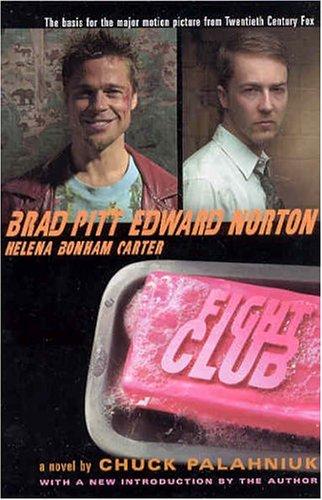
How it was received Praised on release by outlets like The Washington Post and The Seattle Times, though some critics condemned its violent themes; it won the 1997 Pacific Northwest Booksellers Association Award and Oregon Book Award, later becoming a cult favorite after its film adaptation. — Wikipedia
Ending signals — verified, spoiler-light. Tap a question to see only that answer.
Is the romance resolved?
Left openHow does Fight Club end?
The narrator's Project Mayhem plot culminates in a plan to detonate homemade bombs in the basements of several buildings, including one skyscraper positioned near a national museum. Tyler intends for the explosion to serve as an act of martyrdom, killing both himself and the narrator in the process. By this point the narrator has learned, through an offhand comment from Marla, that he and Tyler Durden are the same person: Tyler is a dissociated personality who has been active during the narrator's insomnia-induced blackouts. Every seemingly independent action Tyler took, including founding fight club, having an affair with Marla, and building Project Mayhem into a nationwide organization, was actually done by the narrator himself without his conscious knowledge.
Horrified by this revelation and by the death of Bob, a support-group friend killed during a Project Mayhem operation, the narrator tries to stop the bombing. He travels to the roof of the targeted building, where Tyler confronts him at gunpoint. Marla arrives on the roof with members of the narrator's old support groups, and because Tyler exists only in the narrator's mind and not in Marla's, Tyler's presence vanishes. Alone again, the narrator waits for the explosion, but the bomb fails because Tyler had mixed paraffin into the explosive compound, botching the mixture. Still holding Tyler's gun, and unable to escape the psychological hold Tyler has had on him, the narrator shoots himself in the mouth.
He survives the gunshot. The narrator wakes up afterward in a psychiatric hospital, initially believing he has died and gone to Heaven, and imagines a surreal argument with God about the nature of humanity and destruction. This delusion is broken when hospital orderlies approach him, revealing themselves to be members of Project Mayhem who have infiltrated the staff. They inform him that the organization's plans are still moving forward despite his hospitalization, and that they are eagerly awaiting Tyler's return, making clear that neither the narrator's internal conflict nor the external movement he created has been fully resolved.
✓ Fact-verified against independent sources
Does the film end like the book? — Fight Club (1999)
No — the film changes the ending.
Fight Club · 1999 · film · dir. David Fincher
Fincher's ending is the one everyone quotes, and it is not the one Palahniuk wrote. On screen, Project Mayhem's objective is to erase debt by destroying the skyscrapers of the consumer-credit companies, and it works: the Narrator shoots himself in the cheek, which kills Tyler and leaves him standing, and he and Marla hold hands at the window while the buildings come down.
In the novel the demolition fails. Tyler had cut the explosives with paraffin, so the bomb — aimed at a national museum, not at the banks — never goes off. The narrator puts the gun in his mouth rather than against his cheek and shoots. He wakes some time later in a mental hospital, convinced he is in Heaven, until the staff lean in, tell him they are Project Mayhem, and say the plan is still running and they are expecting Tyler to come back. The film ends on a demolition and a couple; the book ends on a man who failed to die, in an institution his own followers already run.
✓ Every claim checked against the plot summaries of both the book and the film — Wikipedia
Reception summary adapted from Wikipedia, CC BY-SA 4.0.