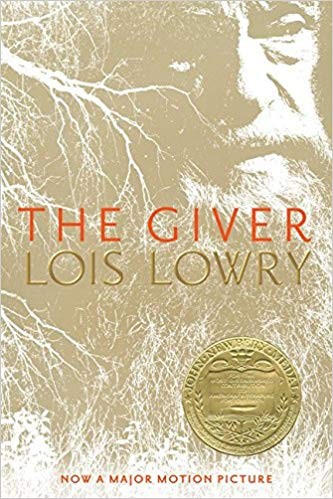
How it was received Winner of the 1994 Newbery Medal, with over 12 million copies sold and a #4 ranking among all-time children's novels per a 2012 School Library Journal survey. Reviewers were divided, with some praising its craft and others faulting its plausibility, and it remains among the most frequently challenged books in schools. — Wikipedia
Ending signals — verified, spoiler-light. Tap a question to see only that answer.
Is the ending happy?
Left openDoes it end on a cliffhanger?
NoIs the romance resolved?
No central romanceDo major characters die?
NoHow does The Giver end?
After months of secret training, Jonas has received enough memories from the Giver to understand what the Community has sacrificed for its safety and order: color, music, weather, love, and true choice, but also war, hunger, and pain. He learns the full truth about "release" when the Giver shows him a video of his own father, a Nurturer, injecting a smaller identical newborn twin with a lethal drug and disposing of the body down a chute. Release is not a peaceful send-off to another community but institutionalized killing, used for infants who fail to thrive, the elderly, and rule-breakers. Jonas also learns that the Giver's previous trainee, his own daughter Rosemary, could not bear the darker memories once they were transferred to her and asked to be released; she died by injecting herself with the same lethal serum, and her memories of pain scattered back into the Community rather than staying contained.
Jonas and the Giver form a plan: Jonas will secretly leave the Community, and because memories return to the people once the Receiver holding them is gone beyond the border, his departure will flood everyone with the memories he now carries, forcing the Community to confront the truth and begin to change. The Giver intends to stay behind to help the citizens cope with the sudden return of real feeling and memory, and afterward to end his own life so he can join Rosemary. They set a date and plan to fake Jonas's death by drowning to slow any search.
The plan is upended when Jonas discovers that Gabriel, the failing infant his father has been fostering at home (who shares Jonas's and the Giver's pale eyes and has shown the beginnings of the ability to receive memories), is scheduled to be released the next morning. Unwilling to let Gabriel be killed, Jonas takes him and flees the Community that same night on a bicycle, well ahead of schedule and without the planned cover story. They travel by day in hiding and by night, moving beyond the boundaries the Community controls, growing increasingly cold, hungry, and exhausted as supplies run out.
In the final scenes, Jonas and Gabriel push on through deepening snow, weak with cold and starvation, Jonas relying on his emerging ability to "see beyond" to find their way. They reach a hill Jonas somehow recognizes, find a sled waiting at its top, and ride it down toward a house glowing with colored lights and a decorated tree, with what Jonas believes is music reaching him for the first time. The novel ends on this image without confirming whether the house and lights are real, whether they represent memory, hallucination, death, or an actual place of safety beyond the Community; Jonas is shown to be suffering visible symptoms of hypothermia as the story closes, leaving his and Gabriel's fate deliberately unresolved.
✓ Fact-verified against independent sources
What happened in The Giver? (spoiler-safe refresher)
Jonas is a twelve-year-old boy from a tightly controlled Community that has eliminated pain, conflict, and difficult choice by embracing "Sameness": no color, no real weather, no war, no strong emotion, and every life role, spouse, and child assigned by a Committee of Elders. At his Ceremony of Twelve, instead of receiving a normal job assignment, Jonas is selected for the rare and highly respected role of Receiver of Memory, the sole person who holds the Community's collective memories of real history and human experience so the Elders can consult that wisdom without exposing everyone to its pain.
Jonas is trained by the current Receiver, an old man who asks to be called the Giver. Through physical transfer of memory, the Giver shows Jonas things no one else in the Community has ever experienced: snow, sledding, color, sunshine, family love, but also war, starvation, and grief. Jonas learns that the Giver once trained a previous successor, his own daughter Rosemary, who could not endure the painful memories and asked to be released; she died by self-administered lethal injection, and her memories scattered uncontained back into the Community, causing lasting damage.
Jonas's understanding of his world unravels further when he discovers, via a video the Giver shows him, that "release" — the euphemism used for sending away infants who fail to thrive, the elderly, and rule violators — is actually killing by lethal injection, and that his own father performs these killings as part of his Nurturer duties. Around this time, Jonas's family has been fostering a struggling infant named Gabriel, who shares Jonas's and the Giver's distinctive pale eyes and shows signs of being able to receive memories from Jonas. When Jonas learns Gabriel is scheduled to be released (killed) because he isn't thriving, Jonas takes Gabriel and flees the Community that same night, well ahead of an earlier plan he and the Giver had devised in which Jonas's departure beyond the Community's border would return all the transferred memories to the citizens, forcing them to reckon with the truth.
The book ends with Jonas and Gabriel making a desperate, hungry, freezing journey away from the Community and its neighboring settlements, arriving at last at a snowy hill where Jonas finds a sled and sleds down toward a house lit with colored lights and what may be music, with Jonas showing signs of hypothermia. Their ultimate fate, and whether the house is real, imagined, or symbolic, is left deliberately unresolved. Key open threads heading forward: whether Jonas and Gabriel survive and reach any kind of real refuge; whether the Community, now flooded with returned memories, changes as the Giver hoped; and the broader question of what other communities and forms of society might exist beyond the world Jonas grew up in. Note that the next book in the quartet follows different characters in a different community rather than directly continuing Jonas's story.
✓ Safe to read before The Giver Quartet #2 — checked for later-book spoilers
Does the film end like the book? — The Giver (2014)
No — the film changes the ending.
The Giver · 2014 · film · dir. Phillip Noyce
Lowry ends on a question. Jonas and Gabriel, starving and freezing, reach what Jonas takes to be Elsewhere; he finds a sled at the top of a hill and rides it down toward a house full of coloured lights and a Christmas tree, and hears what he believes must be music. Whether any of it is there, or whether he is dying in the snow, the book will not say — what it does say is that he has the symptoms of hypothermia.
The film answers the question, and adds a chase to get to it. Asher is ordered to hunt Jonas down with a drone and does, then changes his mind and drops the two of them safely into a river; Fiona is condemned to be Released for helping. When Jonas crosses the border it works, visibly and at once — the memories come back to the community, and Jonas's father stops with the needle in his hand, so Fiona lives. Jonas walks toward a house where people are singing carols, knowing he has won. Nothing is left open.
✓ Every claim checked against the plot summaries of both the book and the film — Wikipedia
Reception summary adapted from Wikipedia, CC BY-SA 4.0.