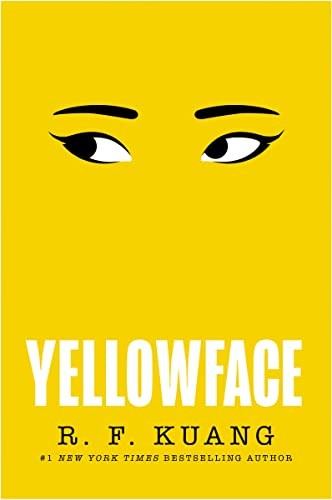
How it was received Reviews were mixed-to-positive: NPR called it gripping and fast-paced, while The Washington Post found its publishing satire perfunctory. It was named to Time's 100 Must-Read Books of 2023 and Amazon's Best Book of the Year. — Wikipedia
Ending signals — verified, spoiler-light. Tap a question to see only that answer.
Does it end on a cliffhanger?
NoIs the romance resolved?
No central romanceHow does Yellowface end?
The novel's central mystery—who has been haunting June with accusations of stealing Athena Liu's manuscript—resolves when June is lured to the "Exorcist steps" at Georgetown, believing she is finally going to confront Athena's ghost. Instead, the voice belongs to Candice Lee, the editorial assistant who had once pushed for a sensitivity reader on The Last Front and was later fired from Eden Press. Candice reveals that she orchestrated the anonymous @AthenaLiusGhost social media campaign and the disturbing Photoshopped images sent to torment June, driven by professional resentment and a genuine belief that June stole and profited from Athena's work. Cornered and unnerved, June finally confesses aloud to stealing the manuscript—unaware that Candice has been secretly recording the entire confession on camera.
When June realizes she's been recorded, she begs Candice not to release it, but Candice refuses, declaring her intent to expose June and write her own account of the scandal. The two women struggle physically over the camera, and June falls and is seriously injured, ending up hospitalized. While June recovers, Candice makes the confession recording public. The literary and media world reacts immediately: Candice is suddenly courted by publishers with offers to write a memoir about uncovering the plagiarism, effectively taking the narrative—and the potential profit—that June had spent the entire book trying to protect.
June is left publicly disgraced, her theft of Athena's novel now confirmed rather than merely suspected. But true to her character, she does not retreat into remorse. Instead, released from the hospital and facing the collapse of her career, June begins plotting her next move: writing her own memoir-style account of the entire affair. She intends to reframe the story as a hoax she orchestrated to expose the publishing industry's tendency to pit female authors against each other, casting herself as a victim of a cyberbullying campaign and Candice as the aggressor. The book closes on this note of unrepentant self-preservation, with June already rehearsing the spin she'll put on her own downfall, leaving her moral culpability unresolved and her capacity for self-justification fully intact.
✓ Fact-verified against independent sources
Reception summary adapted from Wikipedia, CC BY-SA 4.0.